Hoarder Clearance London: Recycling and Sustainability Commitment
 At Hoarder Clearance London we place sustainability at the heart of every clearance. Our core objective for each hoarder removal is to maximise reuse and recycling while minimising landfill. We have set a clear recycling percentage target of 80% of all recovered material to be reused or recycled, with a continuous improvement plan to move that figure closer to 90% over the next few years. This target applies to residential, communal and commercial hoarder clearances across Greater London and is embedded in our job-planning and reporting.
Our approach to achieving the recycle target starts with careful on-site sorting and segregation. Crews trained in responsible clearance separate items into defined streams: textiles, furniture, WEEE (waste electricals), metals, wood, glass, paper/cardboard and general bulky refuse. Where possible we prioritise donation and repair for reusable goods before recycling. The Hoarder Clearance in London teams record material flows for each job so we can benchmark performance by borough and by material type.
 We work closely with local transfer stations and licensed yards across London to ensure proper onward processing. Our network includes municipal transfer stations and independent consolidation yards in North, South, East and West London, chosen for their high recycling standards and good documentation. Items that cannot be reused are directed to specialised processors: mattresses to licensed mattress recyclers, electronics to WEEE facilities, and wood and metal to material recovery facilities. Typical recyclable categories we handle include:
- Textiles and clothing
- Furniture and household goods for refurbish or donation
- Electrical appliances (WEEE)
- Metals, bulk wood, and construction-type waste
- Paper, cardboard and mixed recyclables
Partnerships with Charities, Social Enterprises and Reuse Centres
We maintain active partnerships with a range of charity and reuse organisations across London to ensure that items with life left in them are channelled to people who need them. These partnerships include national charitable networks that accept furniture and electricals, small local community reuse hubs, and social enterprises that run furniture upcycling and job-training programmes. By routing reusable items to these partners we support circular economy objectives and local social value.
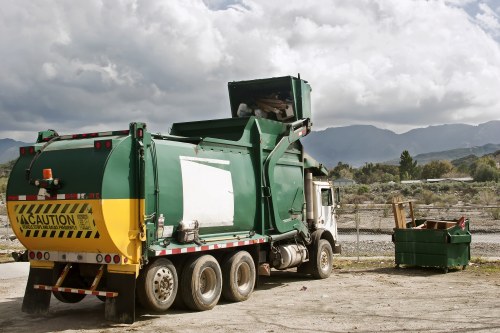 When a property is cleared by our Hoarder Removal London teams, every reusable item is evaluated for donation, resale or repair. We have formal agreements with charities and community partners for regular collections and drop-offs. Strong emphasis is placed on providing documentation for donated items so charities can manage inventory and redirect goods efficiently. This model reduces disposal costs, supports local charities, and helps meet our recycling and reuse targets.
We also work with borough reuse and repair schemes where available. Several London boroughs have supportive networks for furniture reuse and dedicated bulky waste channels which we engage with to maximise diversion from landfill. Our team is familiar with borough-specific protocols and makes clear arrangements for collection points and transfer to community centres.
Local Waste Separation Practices and Low-Carbon Fleet
London boroughs' approaches to waste separation vary, and our operations adapt accordingly. Many boroughs — for example Camden, Hackney, Lambeth, Southwark and Waltham Forest — provide separate collections for dry recycling, food waste and refuse, while others use communal bin systems for flats and high-density housing. We work within those systems when clearing multi-occupancy buildings, ensuring materials are placed in the correct containers and labelled where required. We also honour bulky waste booking rules for boroughs that require pre-booking of council collections.
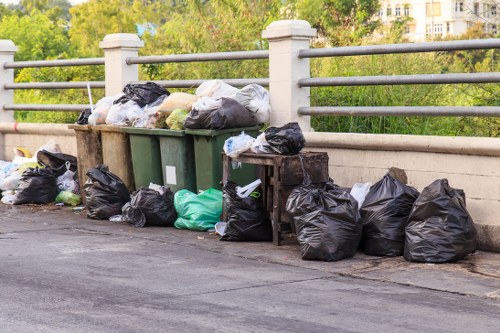 Low-carbon vans and route optimisation are a critical part of our sustainability plan. Our fleet increasingly comprises electric and plug-in hybrid vehicles, and we routinely optimise routing to reduce mileage and emissions. Vehicle choices are guided by payload needs for hoarder clearance jobs: smaller electric vans for inner-London runs, and efficient low-emission diesel-hybrid vans for heavier loads where necessary. We track fuel and electricity use per job so carbon is quantified and reduced over time.
 Beyond vehicles, we minimise single-use packing materials and favour reusable sacks, crates and protective covers. Our teams are trained in compacting and stacking loads to lower the number of trips and the overall carbon footprint of each clearance. We also partner with logistics platforms and transfer stations that prioritise low-carbon handling and consolidated flows.
How the sustainability promise works in practice for London hoarder clearances: every job is scoped to identify reuse opportunities, recycling routes and any hazardous items requiring licensed disposal. We maintain clear records of items diverted from landfill and publish an internal annual sustainability statement to show progress against the 80% recycling target. Our customers receive a brief summary showing what was donated, recycled or responsibly disposed of as part of the clearance.
Key commitments we uphold across Hoarder Clearance London services include:
- Prioritise reuse and donation before recycling
- Use licensed transfer stations and certified recyclers
- Operate a low-carbon vehicle fleet with route planning
- Document and report recycling rates for transparency
Our sustainability work is designed to support circular economy principles in the capital, reduce waste, and create social value through charity partnerships. Whether you book a hoarder clearance, furniture uplift, or an end-of-tenancy service, our promise is to handle items with care, maximise reuse and recycling, and continually lower the environmental impact of our clearances across London boroughs.